Water Damage Costs, Safety, and Next Steps
Understand the scope before requesting an estimate
Answers to common questions
How much does water damage restoration cost?
A useful quote starts with what is wet, how far moisture has spread, and what can be saved. Water beneath flooring can change the scope even when the visible mark looks small. Ask the provider to separate water extraction, structural drying, material removal, and repairs in writing. Normallylazy Water Help connects homeowners with independent providers; the provider assesses the damage and sets the price.
What are the early signs of hidden water damage?
Look for a baseboard pulling away, paint that bubbles, a new musty smell, or a ceiling mark that grows between checks. Tile can hide moisture underneath, so a dry surface does not settle the question. Note when each change appeared and take photos from a safe spot. A local provider can check moisture and explain whether further inspection is needed.
When should I request emergency water damage repair?
Active leaking, spreading water, or a wet ceiling that starts to sag deserves prompt attention. Stay out of affected spaces if electricity, unstable materials, or contaminated water may be involved. Request a callback to check provider availability for emergency water damage repair. Explain whether water is still entering and which rooms are affected so the provider can discuss the next appropriate step.
Can I dry water damage myself with fans?
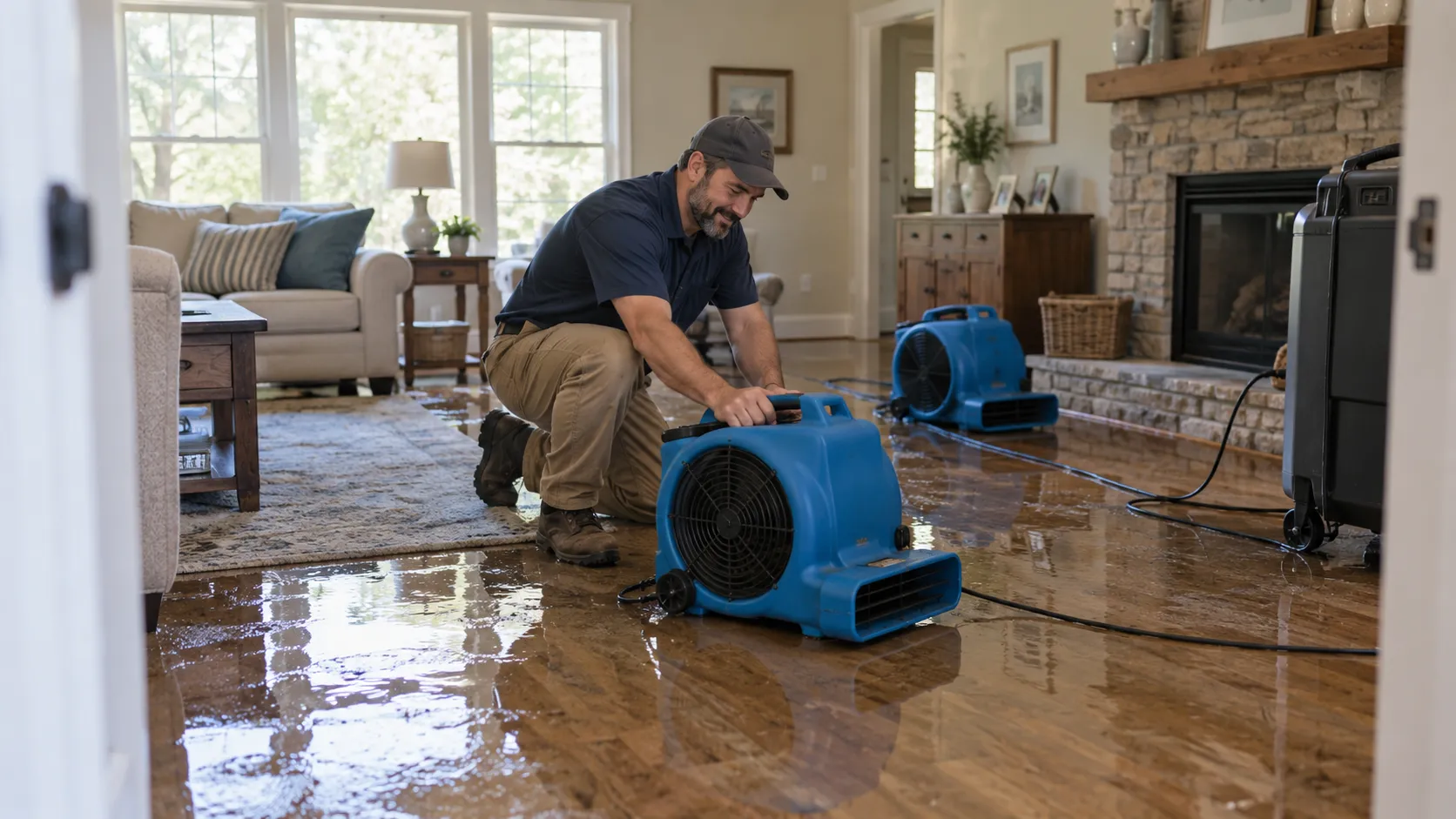
A fan may dry a surface while moisture stays inside a wall or beneath flooring. Home equipment also cannot tell you whether materials have reached an appropriate moisture level. Ask a provider where DIY cleanup ends and structural drying becomes necessary. If the water source is unknown, sewage is involved, or mold is visible, leave affected materials alone pending professional assessment.
What happens during a water damage inspection?
Expect questions about the source, when you noticed the damage, and what has changed since then. The provider may inspect nearby materials and take moisture readings beyond the visible stain. Ask which findings support each proposed task. Before agreeing, request a written scope that explains equipment charges, monitoring visits, material removal, repair exclusions, and how additional work would be approved.
How long does water damage take to dry?
There is no reliable drying deadline based on appearance alone. During the first hours, record visible changes without entering unsafe areas. Over the following days, moisture readings help the provider judge progress. Humid weather, wet insulation, trapped water, and the materials involved can affect drying. Ask what readings support removing equipment and whether extra rental days change your quote.
Will homeowners insurance cover water damage restoration?
Some policies may cover sudden damage; check your policy. The source of the water, exclusions, and your deductible can affect what you owe. Providers can often help document damage for a claim, but your insurer decides coverage. Keep photos, dates, receipts, and written quotes together. Ask the provider how payment works while a claim decision is pending before authorizing work.
Can I request flooded basement cleanup for other low spaces?
Many local homes have slabs rather than basements. Describe the actual space when requesting flooded basement cleanup, whether it is below grade, a sunken room, or a lower storage area. The provider can confirm whether that service fits. Ask how water access, contamination, stored belongings, and drying needs affect the scope, and whether cleanup includes repairs to damaged walls or flooring.
Reach a local provider
Describe the damp spot, leak, or standing water in the request form to request an estimate from a local provider. Request a callback to check availability with providers in our network serving the Tampa Bay area.
No obligation